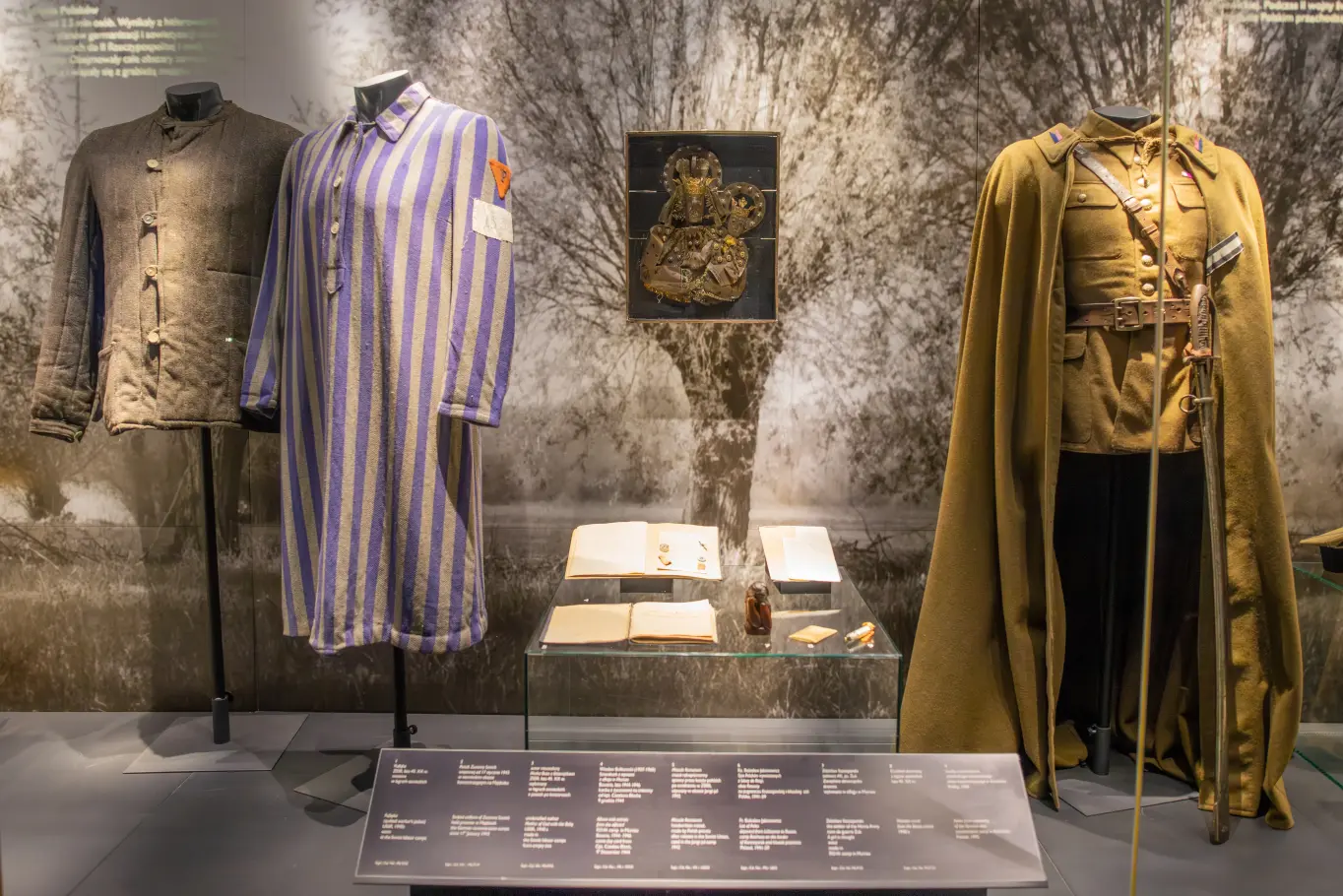
Matka Boża z Dzieciątkiem
W ramach cyklu „Eksponat miesiąca” prezentujemy wyjątkowe obiekty z naszych zbiorów, które wyróżniamy ze względu na ich związek z istotnymi wydarzeniami historycznymi, rocznicami postaci ważnych dla dziejów Polski oraz obchodami świąt kościelnych. Eksponatem miesiąca w styczniu 2026 roku jest wizerunek Matki Bożej z Dzieciątkiem, wykonany w latach 40. XX wieku w sowieckich łagrach. Obiekt ten stanowi niezwykle poruszające świadectwo wiary, nadziei i duchowego oporu Polaków zesłanych w głąb Związku Sowieckiego.

Dla mieszkańców wschodnich terenów Polski okres okupacji sowieckiej kojarzy się przede wszystkim z masowymi deportacjami w głąb Związku Sowieckiego. Ta forma zbiorowych represji ze strony bolszewickiego okupanta dotknęła setki tysięcy polskich obywateli. Wywózki Polaków na północ i wschód Związku Radzieckiego były zorganizowaną antypolską akcją, która zaczęła się w lutym 1940 roku i trwała do czerwca 1941 roku.
Pierwsza masowa deportacja Polaków na Sybir, przeprowadzona przez NKWD rozpoczęła się 10 lutego 1940 roku. W głąb Związku Sowieckiego wywieziono około 140 tys. obywateli polskich. Wielu umarło już w drodze, tysiące nie wróciły do kraju. Wśród deportowanych były głównie rodziny wojskowych, urzędników, pracowników służby leśnej i kolei ze wschodnich obszarów przedwojennej Polski.
Dla setek tysięcy polskich rodzin te dni stały się początkiem cierpienia, deportacji na Sybir oraz niewyobrażalnych tragedii.
The painting on display is deeply moving and is part of the story of thousands of Poles exiled to Siberia. It was made from materials available in the gulags - tin sheets of used canned goods and wood.
Gulags, or labor camps in the USSR, were places where prisoners were forced to do the hardest work: mining minerals, cutting down trees or processing raw materials. The work took place in extreme conditions, often in the Siberian cold, without proper clothing, medicine or medical care, leading to the prisoners' exhaustion and rapid death. Food rations were scarce and dispensed subject to the completion of high daily work standards. Contact with families and the outside world was very limited.
Soviet authorities viewed deportations as a method of getting rid of "enemy" elements, including Poles. Although researchers of the period are still debating the exact number of deportees, it is estimated that in 1939-1941 about 70-80% of the deported citizens of the Second Polish Republic were Poles, the rest being Ukrainians, Jews and Belarusians.
The image of Our Lady and Child can be seen in our museum on the second floor. The figures in the painting are cut out schematically, depicted frontally. On the heads of the figures are crowns: closed at Mary, open at the Child. On the halos are placed metal officer stars - 13 at the Mother of God and 8 at the Child. Symbolic black stars and floral elements are painted on the robes. The image is attached to three boards, painted black on the inside, gathered in the form of a small wooden box, reinforced with two slats on the back.
The museum's collection also includes moving memoirs of children staying at the center for Polish refugees in Sanata Rosa (Mexico). The notes, written at the request of Zofia Orlowska and Father Jozef Jarzębowski, MIC, are a poignant description of the wandering and suffering of the children who had to live at that time.
Tekla Raczynska, born in 1928 and deported from the Novogrudok province to the Vologda region, described the day Russia invaded Poland in this way:
"The day of September 17 has arrived. A day that will be written in our history in bloody letters like the first of September. The Bolsheviks cross the Polish border and go all out with a raid. They are collapsing all roads, paths, guesthouses, like a mob that is going for a deadly battle (...) Those who stopped said the strange news that they were going "Polshchy" to help. Some rejoiced, others again showed a face of displeasure at such uninvited help. And the latter, who thought so, were not disappointed, for immediately in a few hours, as the Bolsheviks marched through the Polish lands, word came that they were disarming the Polish units they encountered, and taking the commanders with them, and it was not known what they would do with them."

And Wanda Dominiak recalled September 1 this way:
"At 4 a.m., over the radio, the announcer announced the news, which was very sad for us, that the Germans had declared war on Poland and that our troops were fighting with frantic ferocity. On hearing the news, there was a crazy bustle and movement throughout Brest. Daddy sat day and night by the telephone and received orders broadcast from the fortress. A general gloom arose, the population did not sleep at night, as they waited with intensity for more and more news (...) Daddy came late at night, tired, upset, but he did not want to show it to us (...) After an hour of rest, someone began to knock on the door, it was opened. It was a soldier with an order from a major. Daddy received it, thanked him and began to get ready to go. After a few minutes he was ready, and without saying anything he began to say goodbye to us. A lament arose, which terribly moved Daddy and forced him to return once more to us. He said goodbye a second time and uttered brief words that have been etched deeply in my memory: "I give you to the care of the Holy Family," and as he left, he made the sign of the Holy Cross over us with his hand. The long moments and long days were no longer meaningless, as thoughts like mary kept us awake."
