History of the museum
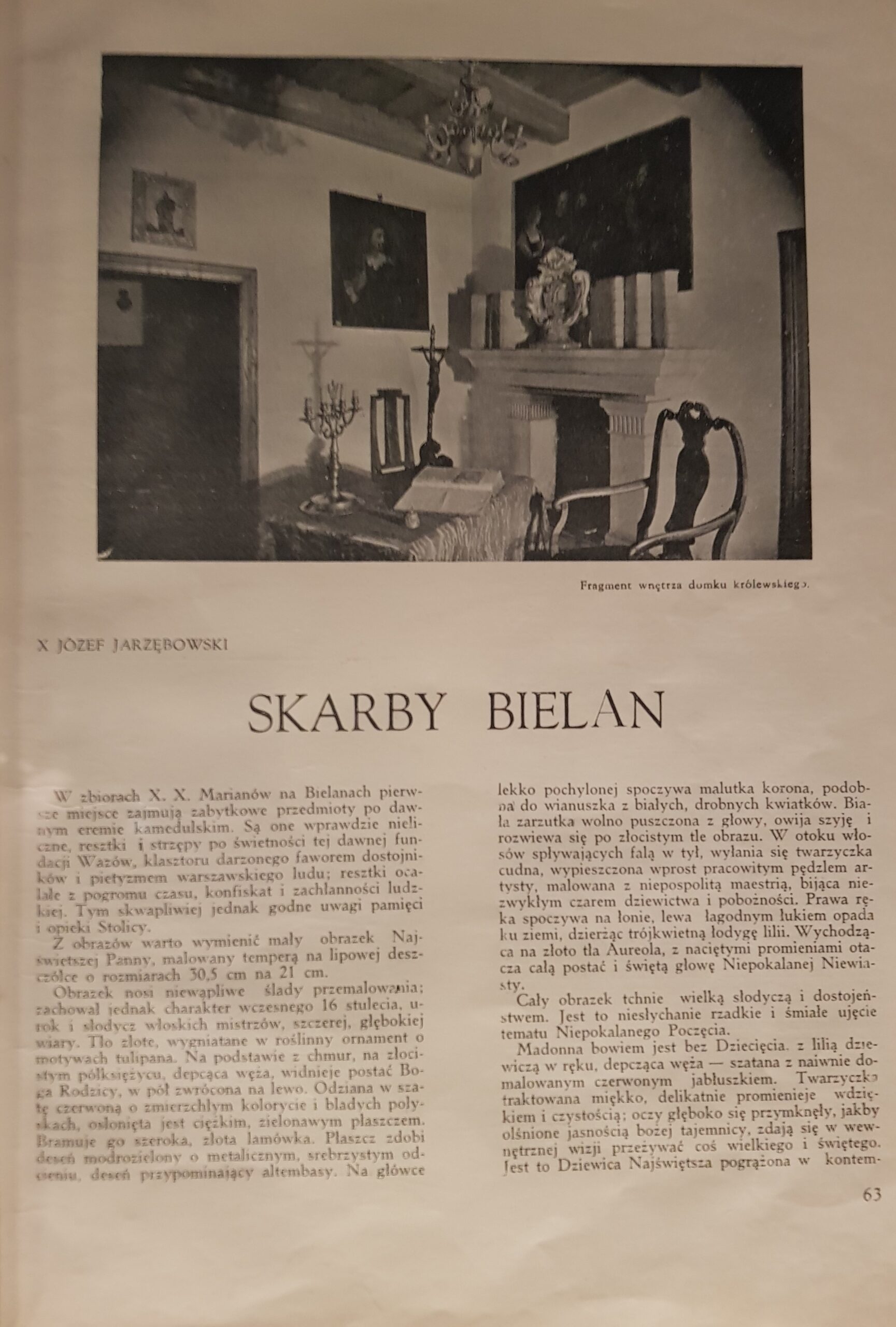
The origins of the museum date back to 1925, when Father Jozef Jarzębowski was assigned to work at the Bielany School and Educational Institution of the Marian Fathers in Warsaw. In addition to his work as an educator and teacher, he took care of the humanities laboratory. It was then that the idea of establishing a future school museum was born. With the approval of the superiors, the collection of exhibits began. The museum collected documents and memorabilia illustrating the history of Poland from pre-partition times and the period of the struggle for independence, especially the national uprisings of Kosciuszko, November and January. Rev. Jarzębowski recalled:
It started with a few old coins, some old maps and one autograph - K. Ujejski. But I and some of my young historians were terribly proud of what is! (...) - this is not work in vain. We are growing.
The enormous passion and commitment of the priest, allowed in a few years to create a valuable collection in Bielany. From the beginning, Fr. Joseph personally exercised substantive care over the nascent museum collection, which influenced the nature of the emerging collection.
Developing his historical and collecting passions, he took special care and reverence especially for documents and memorabilia related to the January Uprising. The collection collected by the priest, even before the war, gained a reputation as one of the three primary sources of knowledge about the events of 1863.The museum continued to grow with new and valuable exhibits. The main idea guiding the priest in the creation of the collection was the education and upbringing of the students of Bielański College. The exhibits had a didactic function, helping to teach lessons and shape the students' national and patriotic attitudes. The memorabilia were meant to stimulate the imagination and nourish the hearts of students. Alumni learned about the history of the homeland and prominent Poles.
The Bielany museum organized numerous exhibitions commemorating anniversaries of historical events, figures of Polish history and culture, as well as annual Pentecost exhibitions. They aroused the interest of both students and the growing public visiting Bielany. The museum's size quickly exceeded the needs of the middle school. It became a repository of national memorabilia and an important center of Polish culture. Rev. Jarzębowski wrote: "Bielany by its character is perfectly suited for the creation of a Catholic-national museum. They can become an academy of the great past, for entire generations who grow up here or visit the charming Bielany monastery."

World War II
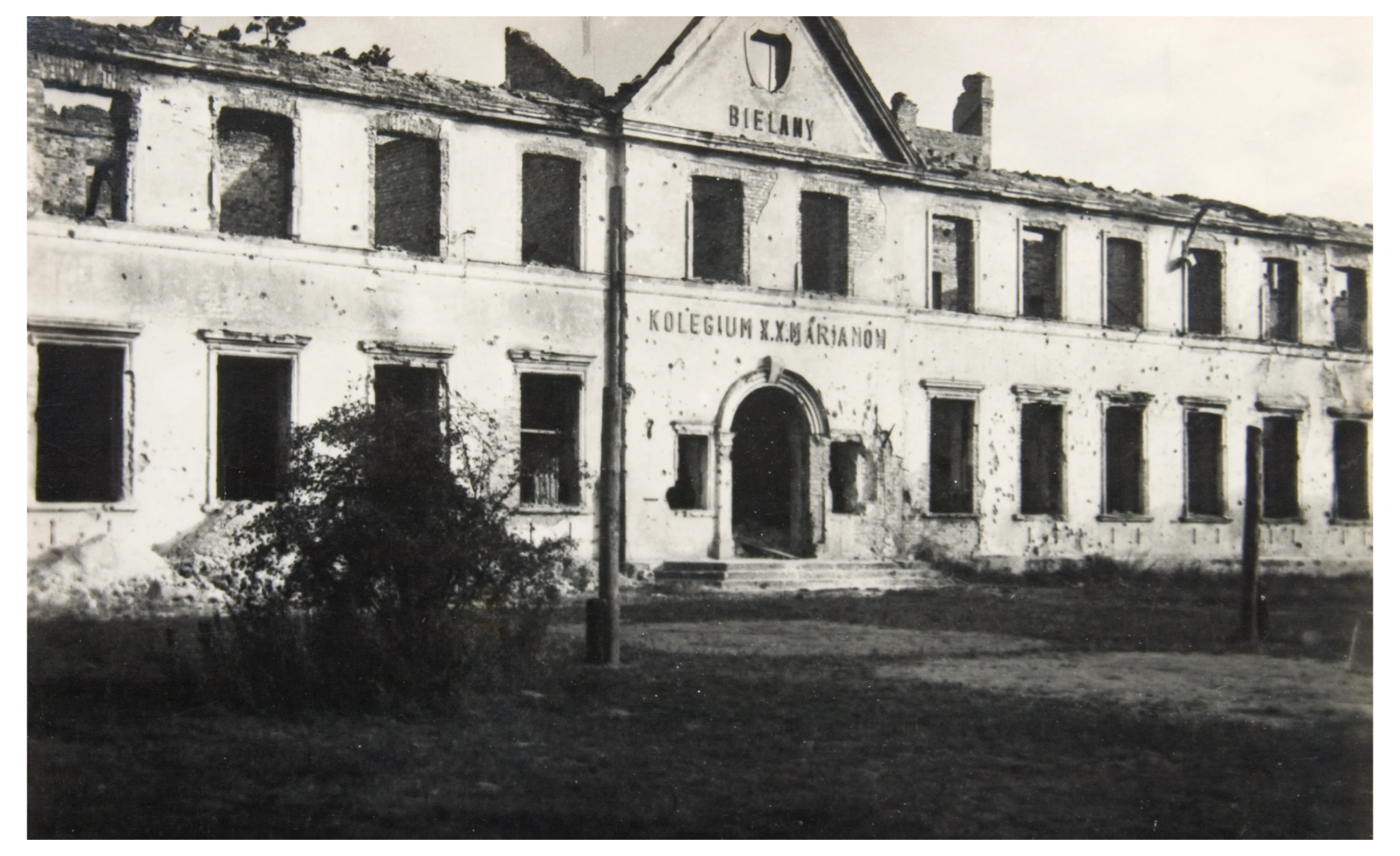
The outbreak of World War II interrupted all plans. The collection was divided up and given for safekeeping to various individuals and institutions outside Warsaw. On September 6, 1939, Rev. Jarzębowski, like many Warsaw residents, left the capital. In his wartime wandering he took with him part of the collection, which concerned the January Uprising. While in Lithuania, in June 1940, fearing for their safety, he handed them over to the diplomatic post of the Holy See, with the request that they be sent to the Polish Museum in Chicago as a deposit. Fr. Jarzębowski's steadfast attitude meant that these and other museum objects were saved from the turmoil of war.
Rev. Jarzębowski's wartime wandering led through Lithuania, Russia, Japan, the United States, Mexico and Italy, ending in the British Isles after 11 years. Wartime experiences and new responsibilities did not interrupt his collecting passion. With the Bielany museum in mind, he searched everywhere he found refuge, primarily for polonica. He also expanded the collection to include antiquities
the cultures of the countries he visited.
After the war
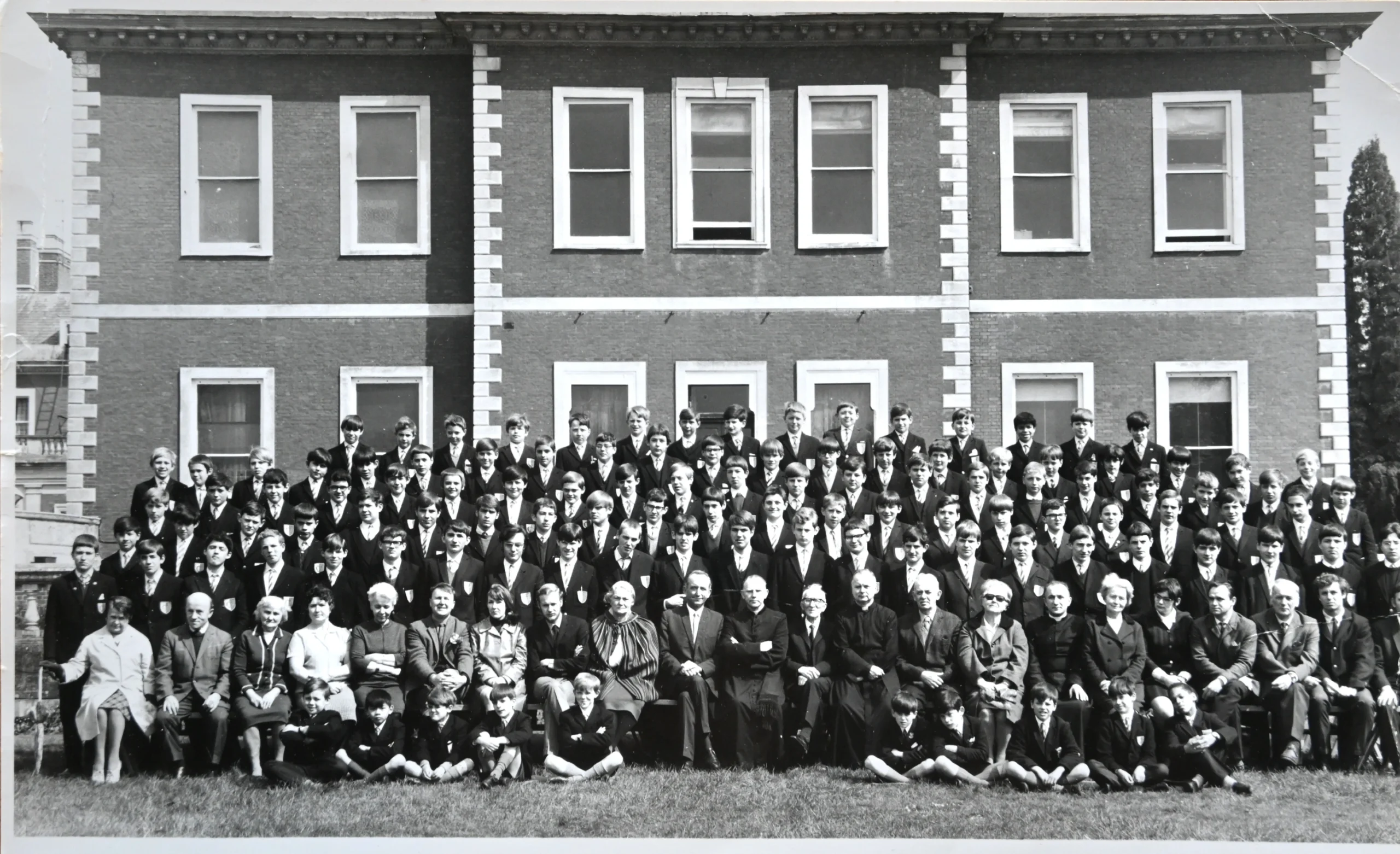
In 1950, Fr. Joseph arrived in England and began working among Poles settled on the islands. After 3 years, the Marians began to establish a school in England's Fawley Court located on the Thames River near London. A Divine Mercy College was established there with an English high school curriculum, expanded to include the study of Polish language, literature and Polish history.
As was the case before the war in Warsaw's Bielany district, a museum and library were started almost immediately in England on the initiative of Fr. Joseph.
The basis of the new museum's collection consisted of items collected by the priest during his wartime wandering. Among them were polonica and, among other things, relics from Japan and Mexico. England was to be only a stop on the way to Poland for these collections. Despite the recognition by Western countries of the government of the People's Republic of Poland and the new political order in Central and Eastern Europe, Fr. Jarzębowski, like many Poles who had to live abroad, did not give up hope of returning to a free Fatherland. Meanwhile, the Marians were expelled in Warsaw's Bielany district.
With a sense of mission to save the national heritage, both through legal and unofficial means, the collection of exhibits from Poland at Fawley Court began. Priests and lay friends transported salvaged artifacts scattered during the war from the Bielany museum to England. Each rescued memento caused great emotion and joy. Bielany exhibits arriving in England from the late 1950s began to form the main core of the museum's collection at Fawley Court. The collection was growing with new objects from purchases and donations from the Polish community.
The priest's numerous contacts with private collectors and antiquarians in England, France, Italy, Germany and Poland contributed to the fact that the museum's collection was growing, especially with Polonica. The collection was used primarily for didactic purposes, to shape the patriotic attitudes of middle school students and to preserve the Polish language, traditions, culture and knowledge of the history of the country they came from. Fr. Joseph's attitude and his collecting passion opened the doors and hearts of the Polish émigrés in particular.
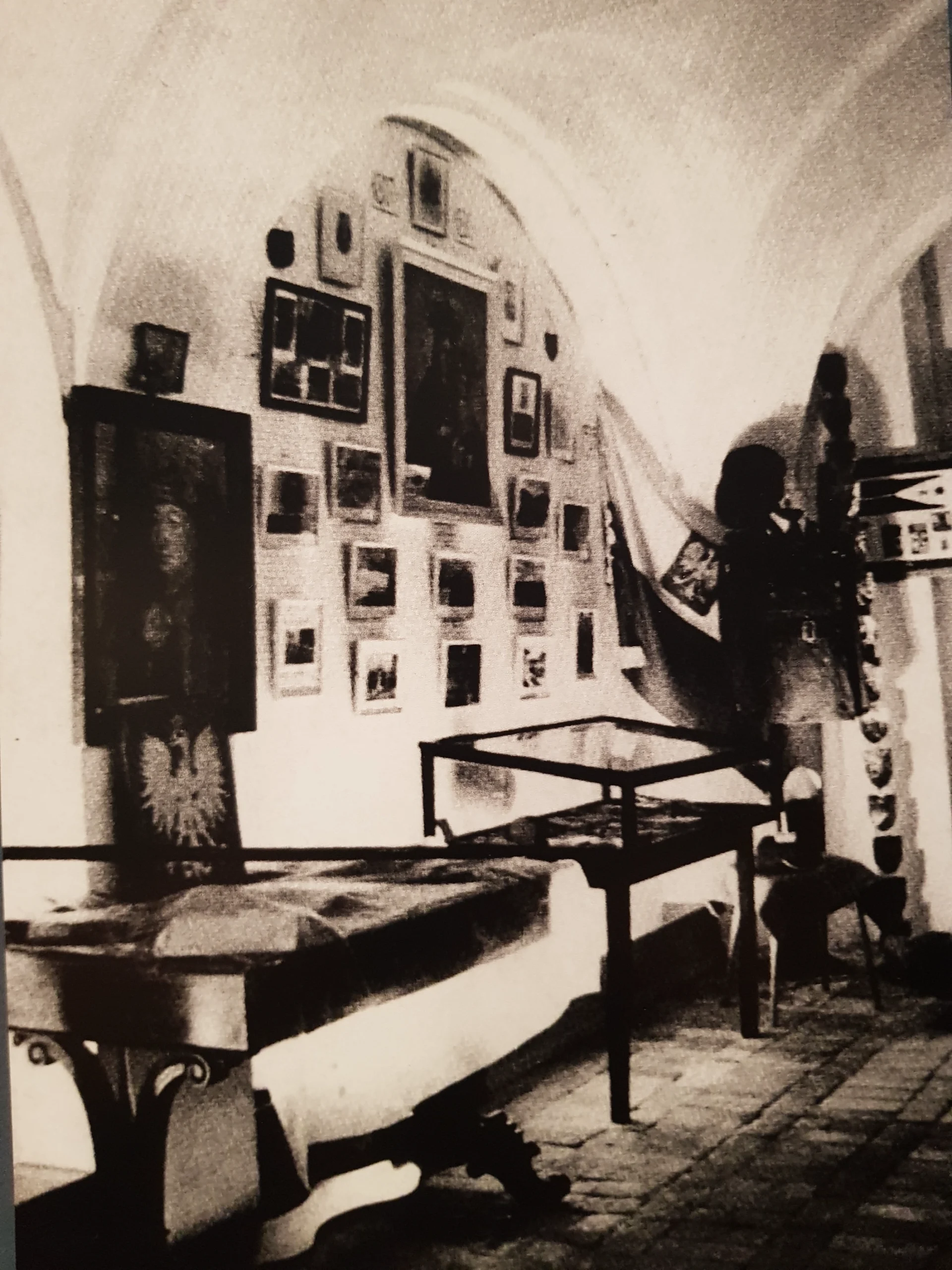
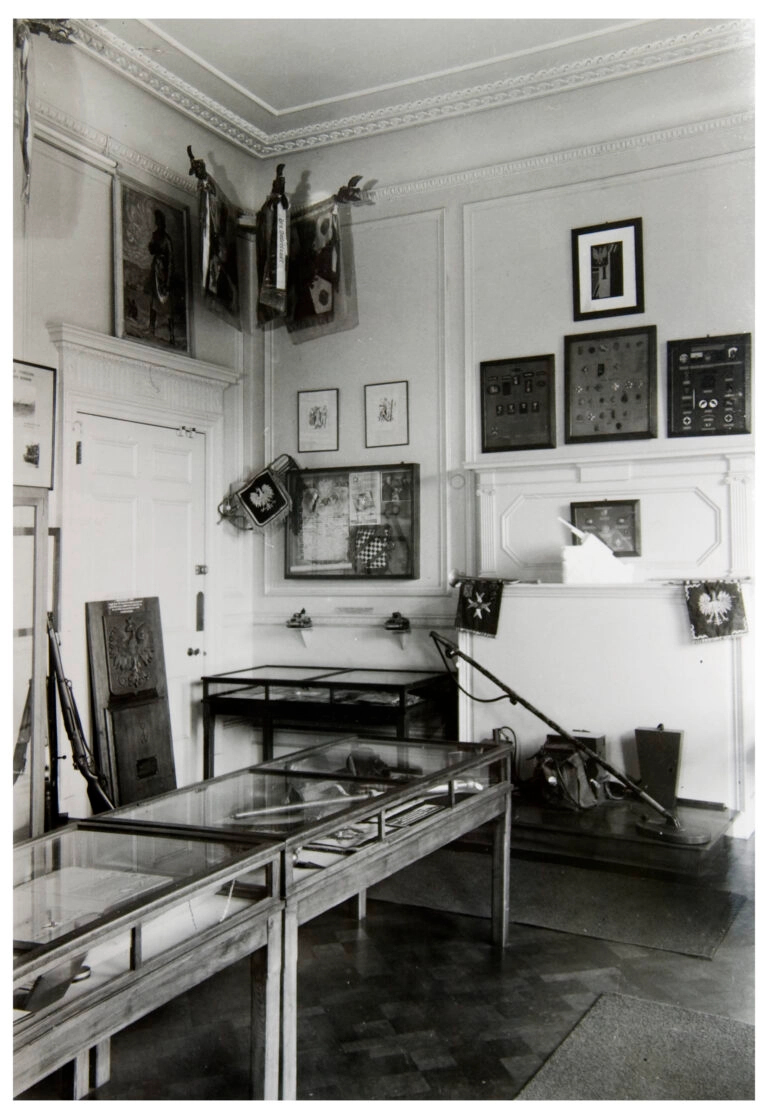
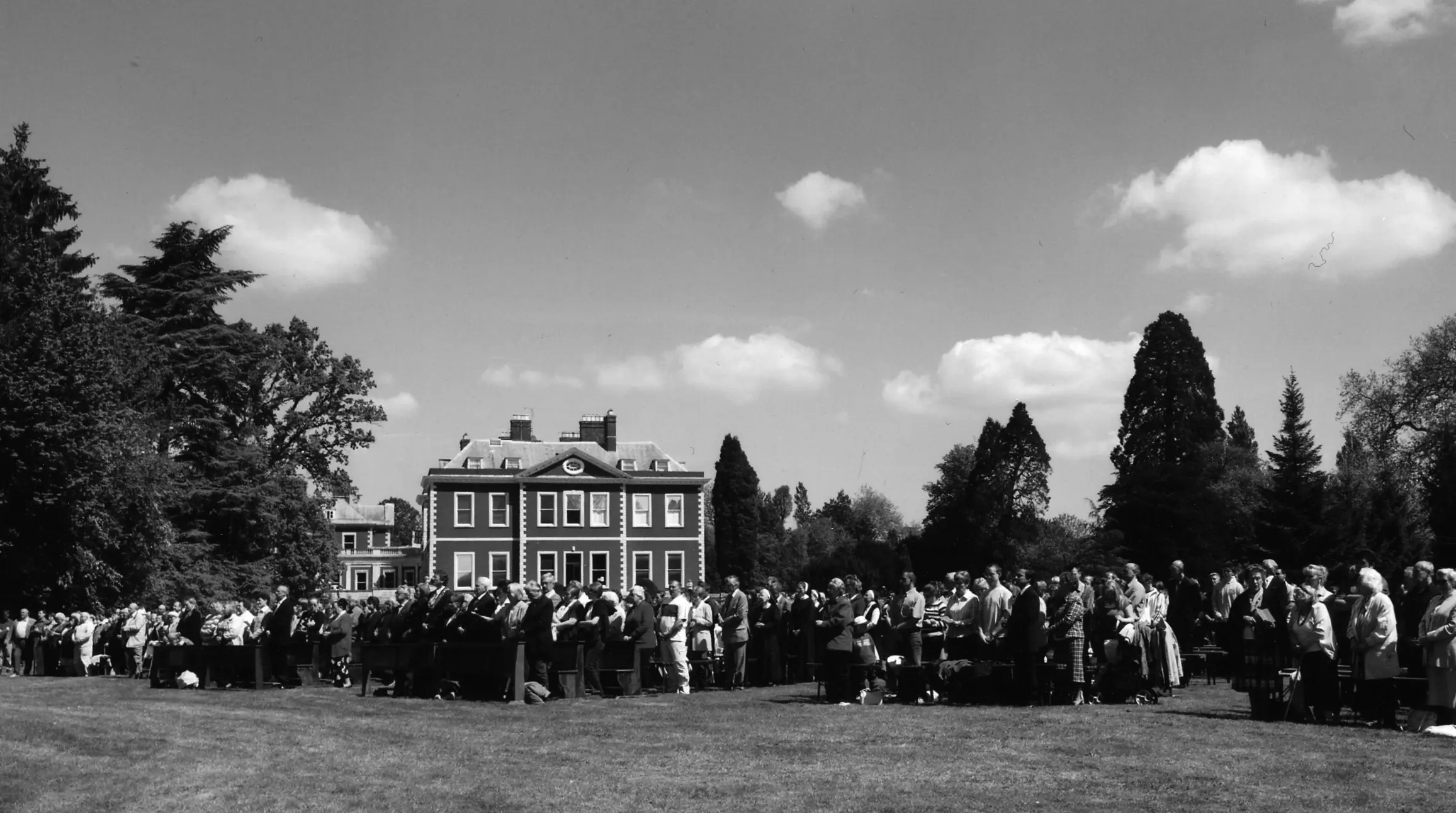
From Bielany to Fawley Court, Rev. Jarzębowski also moved the tradition of holding annual Pentecost exhibitions. They were an opportunity for Poles scattered around the British Isles to meet and gathered crowds of thousands of Poles. The exhibitions were mainly devoted to national anniversaries, great figures of Polish history and literature, and also allowed the presentation of the museum's new acquisitions.
Annual meetings of the Polish community were an important part of Polish émigré life. They contributed to strengthening ties, preserving traditions and culture, which made Fawley Court an important center of Polishness in the West, which in time came to be known as "Bielany nad Thames."
Museum after death of Fr. Jarzębowski
After Fr. Jozef Jarzębowski's death in 1964, the museum was cared for by Alphonse Jacewicz, who had worked with the priest since World War II, and successive superiors of the Religious House at Fawley Court. An important influence on the nature of the collection was Fr. Pawel Jasinski, MIC, an alumnus of Fr. Jarzębowski's from Bielany Gymnasium, who expanded the collection to include sacred art, especially European religious painting. In 1965, the museum received mementos of General Jozef Haller. In 1966 Major Witold Buchowski donated a collection of Polish historical white weapons to the museum, and in 1985 Zygmunt Stanislaw Ipohorski-Lenkiewicz donated a collection of white weapons, including exhibits from around the world.
In 1979, the museum became one of the members and founders of the permanent conference of Polish Museums, Libraries and Archives in the West. The 1970s and 1980s were a period of organizing the collection. It was then that the first guide to Fawley Court in Polish was written. In the spring of 1982, the museum was registered and opened to the public. Six rooms of the palace were made available. The Marble Room housed portraits of Polish historical figures, the Purple Room was used to display the collection of religious paintings. In the library, part of the historic book collection was shown. In two underground halls, the so-called Knights' Chambers, weapons, armaments, elements of the nobility's attire from the 18th century and knightly armor from the 16th to the 18th century were placed, as well as an exhibition dedicated to the Poles' struggle for the independence of the Fatherland.
Another turning point in the museum's history came in 1986, with the College of Divine Mercy finally closing for economic reasons. The museum made efforts to develop new goals and ways of operating, among which the most significant was to open up to the British public. The reorganization was undertaken by the next superior of the Religious House and director of the museum, Fr. Wladyslaw Duda. Due to poor conditions and too much moisture in the rooms, it became necessary to move the exhibits from the underground rooms to the second floor. As a result of the changes, a new exhibition room was created on the second floor - the Ipohorski-Lenkiewicz and Major Witold Buchowski Hall. Objects of both collections were placed there, creating a rich and diverse collection of European, Eastern and exotic weapons from the 16th to 19th centuries.
Transferring the collection to Poland
In 2000, the museum began working with the National Library in Warsaw to organize and create a catalog of the museum's book collection. Students and graduates of art history at the Catholic University of Lublin had already been organizing the art collection. Employees of the Central Textile Museum in Lodz took part in the work on the textile collection. In 2002, Father Wojciech Jasinski assumed the duties of supervisor of the House and director of the Museum. In connection with the planned relocation of the Religious House at Fawley Court, the Superior General, together with the council of the Congregation of Marian Fathers, decided in 2006 to move the Museum from Fawley Court to Lichen.
The decision to move the museum from Fawley Court to Poland symbolically closes the 80-year period of the institution's activity. The museum was an important center of Polish émigré life. It contributed to strengthening ties, preserving tradition and culture.
The collection provided a link between the visible, present - the everyday reality of emigration and the invisible, absent - the historical past and the belief in the restoration of the homeland's independence. Many of the memorabilia donated by the Polish community to the museum had little historical value, but carried a huge emotional charge. They bore witness to the emigrants' fates and the injustices suffered. Fawley Court, in its symbolic dimension, became something like a national shrine. No wonder, then, that the news of the closure and relocation of the museum from Fawley Court to Lichen moved a part of the emigrant community. In recent years, however, interest in the museum in exile has declined sharply. Visitors, including the Polish community, took less and less interest in the collection. Annually, only about 500 people visited the museum at Fawley Court.
Museum named after Rev. Józef Jarzębowski in Licheń
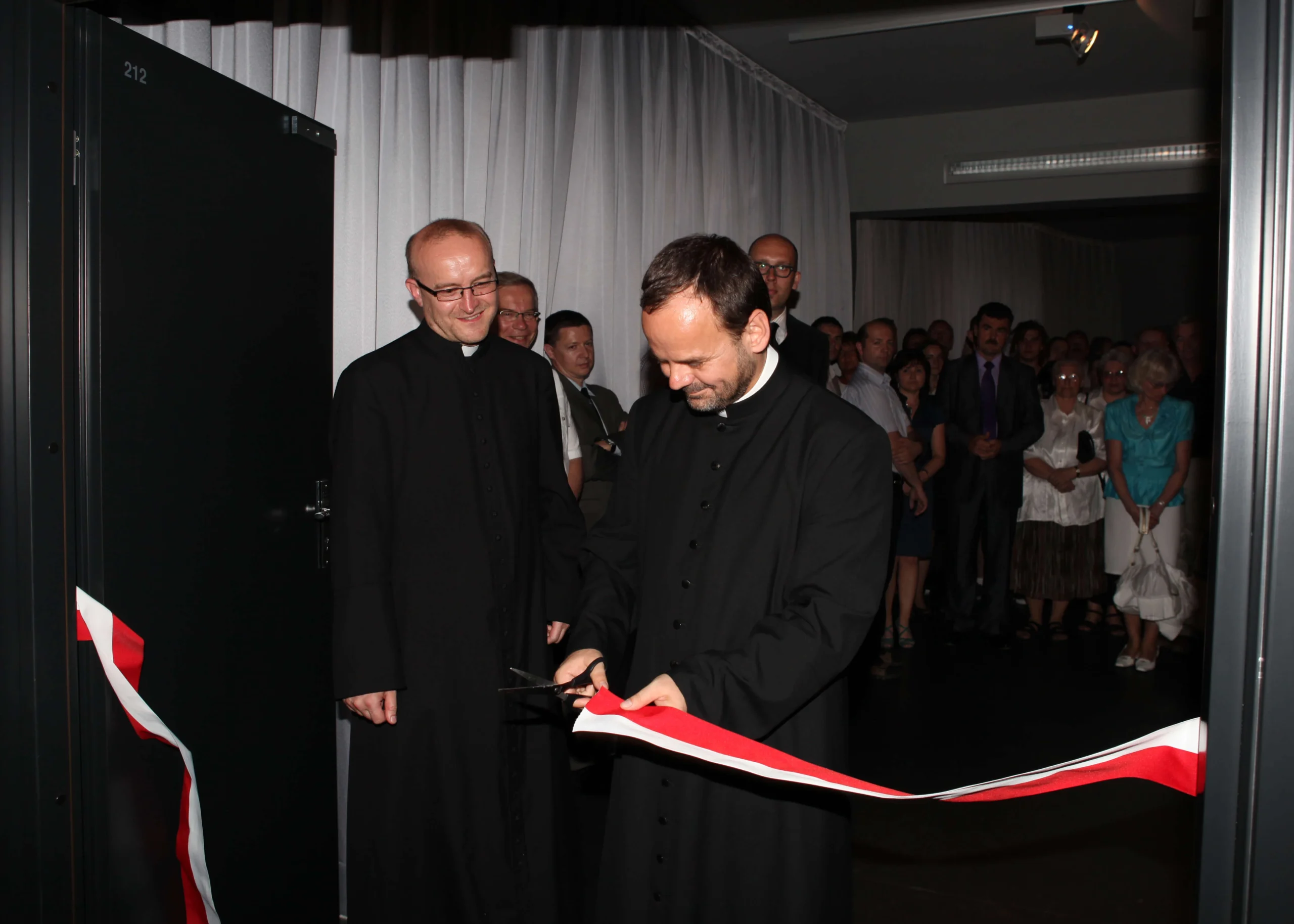
In 2007, the collections of the museum at Fawley Court came to Licheń. On the second and third floors of the Lichen basilica, renovation work was already underway on the rooms of the museum to be built. The shape and idea of the exhibition and the decoration of the halls of the museum is due to art historian Wojciech Luchowski. On July 2, 2010, the museum collection, which had its origins in a future museum in Warsaw's Bielany district, was opened to the public. The museum was named after its creator, Rev. Jozef Jarzębowski.
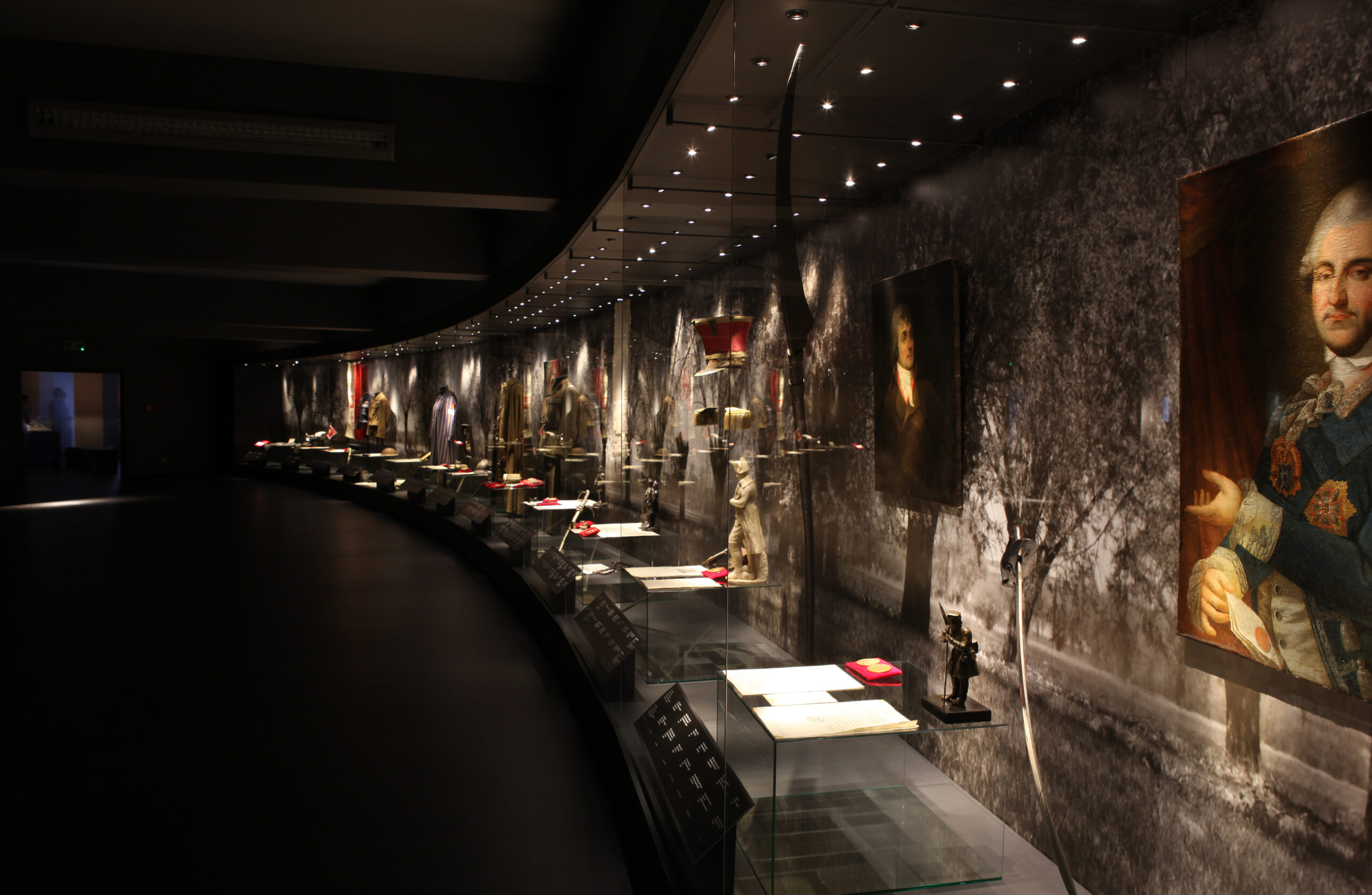
Photo gallery


